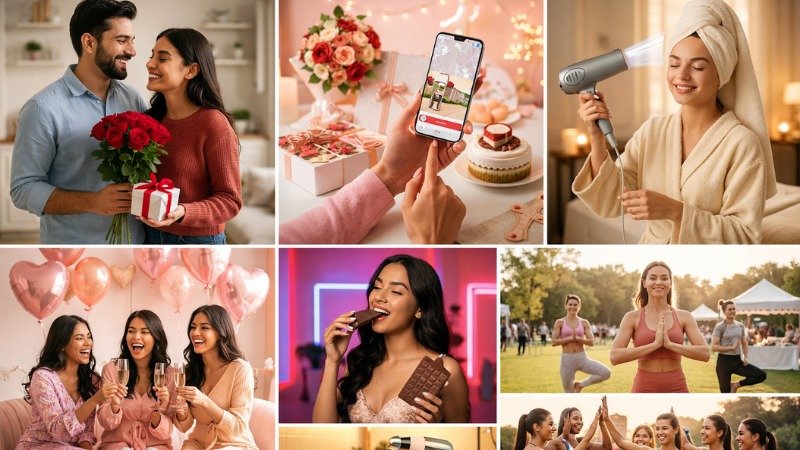
Valentine’s Day is no longer just about candlelight dinners and red roses. It has evolved into a wider cultural moment, one that embraces friendships, self-love, wellness, indulgence, and identity. As consumer behaviour shifts from performative romance to personal, inclusive celebrations, brands across gifting, beauty, wellness, and lifestyle categories, brands are witnessing a deeper shift, from performative romance to personal meaning and are adapting their narratives. Love hasn’t disappeared. It has simply expanded.
In conversation with Adgully, Avi Kumar, CMO at FNP; Himanshu Chawla, Co-founder of Bakingo; Shrey Sehgal, Co-founder of FlowerAura; Himanshu Adlakha, Founder of Winston; Arijit Sengupta, CMO at Zydus Wellness; Mahesh Ravaria, Executive Director at Beauty Garage Limited; and Tejasvi Madan, Founder of BeyondBound, unpack how Valentine’s Day is transforming from a couple-centric occasion into a broader celebration of connection, confidence, and choice.
How Has Valentine’s Day Gifting Evolved?
The biggest change? Love is no longer confined to couples.
Avi Kumar reflects, “Valentine’s Day has evolved from being centred purely around couples to becoming a wider celebration of relationships. People don’t want occasions to feel restrictive anymore — they want to celebrate every relationship that adds value to their lives.”

That widening lens is visible in consumer behaviour.
Himanshu Chawla notes that the occasion now stretches beyond a single day: “It’s no longer just February 14. It’s a week-long build-up where consumers are choosing personalised and experience-led options. Customised cakes, themed desserts — gifts that feel thoughtful rather than generic.”
Personalisation, he adds, is key. People want gifts that reflect inside jokes, shared memories, and specific emotions.
Flowers, too, remain timeless — but they are rarely standalone anymore.
Shrey Sehgal explains, “Roses continue to be the most classic expression of love, but customers now pair them with cakes, chocolates, and personalised gifts. They want to create a complete experience, not just send a product.”
And increasingly, that experience includes oneself.
Himanshu Adlakha sees a strong shift toward self-care: “Valentine’s isn’t departing from tradition — it’s evolving. Alongside romantic gestures, we’re seeing growth in experiences, wellness, and grooming. Self-care has become a meaningful expression of love.”
For him, grooming rituals are deeply tied to confidence — and confidence, in turn, strengthens every relationship.
In indulgence categories, the shift is equally nuanced.
Arijit Sengupta points out, “The biggest shift is in mindset. Valentine’s is no longer driven only by traditional couples. Women are decision-makers and self-gifters. Indulgence is being redefined — from grand gestures to mindful, intentional experiences.”
Chocolate still symbolises comfort and sensuality, but consumers now want it aligned with wellness and balance.
From a haircare lens, the focus has moved inward.
Mahesh Ravaria says, “Valentine’s has become less about symbolic gifting and more about everyday self-expression. Self-gifting today isn’t indulgence — it’s maintenance and confidence-building.”
And perhaps the most striking reframing comes from activewear.
Tejasvi Madan sums it up powerfully: “Valentine’s Day is no longer just about romance. It’s about loving your strength, your ambition, your discipline. Self-gifting has become aspirational — it signals independence and confidence.”
In short, Valentine’s is no longer a script. It’s a mirror — reflecting how people define love for themselves.
Are Brands Moving Away From Stereotypical Romance?
The answer isn’t rejection — it’s expansion.
Avi Kumar clarifies, “We’re not moving away from love stories — we’re broadening them. Our role isn’t to define what love looks like, but to enable people to celebrate every connection that matters.”
At Bakingo, relatability has replaced fantasy.
Himanshu Chawla shares, “Instead of stereotypical romance narratives, we focus on everyday emotional moments — sharing dessert with friends, surprising someone with a personalised cake, or even ordering something for yourself.”
Similarly, FlowerAura’s storytelling has softened.
Shrey Sehgal explains, “We highlight simple, real gestures. Love doesn’t need to be complicated — even sending flowers at the right moment can carry strong meaning.”
At Winston, inclusivity begins at product design.
Himanshu Adlakha says, “Our grooming solutions are built to be meaningful as gifts but also intuitive for daily self-care. Valentine’s celebrates love in many forms — self-care, partners, even caring for pets.”
For Zydus Wellness, the evolution has been tonal.
Arijit Sengupta reflects, “Earlier communication focused on reassurance and functionality. Today, we’re embracing a more confident, expressive narrative. Women are at the centre — owning their indulgence, not passively receiving it.”
Haircare messaging, too, has shifted from one-day transformations to long-term habits.
Mahesh Ravaria notes, “We consciously avoid couple-focused clichés. Instead, we talk about routines, self-investment, and confidence built over time.”
And BeyondBound takes a firm stance against outdated tropes.
Tejasvi Madan says, “You won’t see messaging like ‘dress for him.’ We focus on loving your body, your ambition, your journey. We’re not anti-romance — we’re pro-expansion of love.”
The cultural undercurrent is clear: brands are replacing fairy-tale narratives with authentic, lived experiences.
How Important Is Valentine’s Day in the Marketing Calendar?
Commercially, it still matters — but the approach has matured.
For FNP, it remains a cornerstone moment.
Avi Kumar explains, “We build emotional relevance in the lead-up and sharpen performance marketing closer to the date. Storytelling builds connection, and performance drives conversion.”
Bakingo sees Valentine’s Week as both engagement and acquisition.
Himanshu Chawla shares, “Social content drives discovery early, but high-intent search and targeted communication perform strongly in the final 48 hours. Emotion builds early — convenience closes the sale.”
FlowerAura witnessed tangible growth this season.
Shrey Sehgal reveals, “We saw around 28 percent year-on-year growth during Valentine’s Week. About 33 percent of orders came through quick commerce — showing how critical speed and reliability have become.”
For Winston, the occasion blends brand and business seamlessly.
Himanshu Adlakha says, “It’s a strategic moment where commercial opportunity meets storytelling. We align product launches with inclusive narratives to stay culturally relevant.”
Zydus Wellness treats it as a compressed but powerful window.
Arijit Sengupta notes, “Valentine’s brings high emotional relevance and strong purchase intent together. We see it as a cohesive funnel — emotion at the top, availability and product at the bottom.”
Not every brand, however, chases spikes.
Mahesh Ravaria offers a measured view: “For us, it’s more of a cultural moment than a commercial spike. Self-love and hair confidence should be practised year-round.”
And for BeyondBound, it’s about identity more than discounts.
Tejasvi Madan concludes, “Valentine’s is a brand-building moment. Consumers are emotionally receptive, especially in Q1. We balance performance with community-led storytelling and founder narratives. It’s about building belonging, not just sales.”

Author: Brand Lab
BrandLab is a dedicated media intelligence platform covering the rapidly evolving landscape of public relations, advertising, marketing, and media industries.